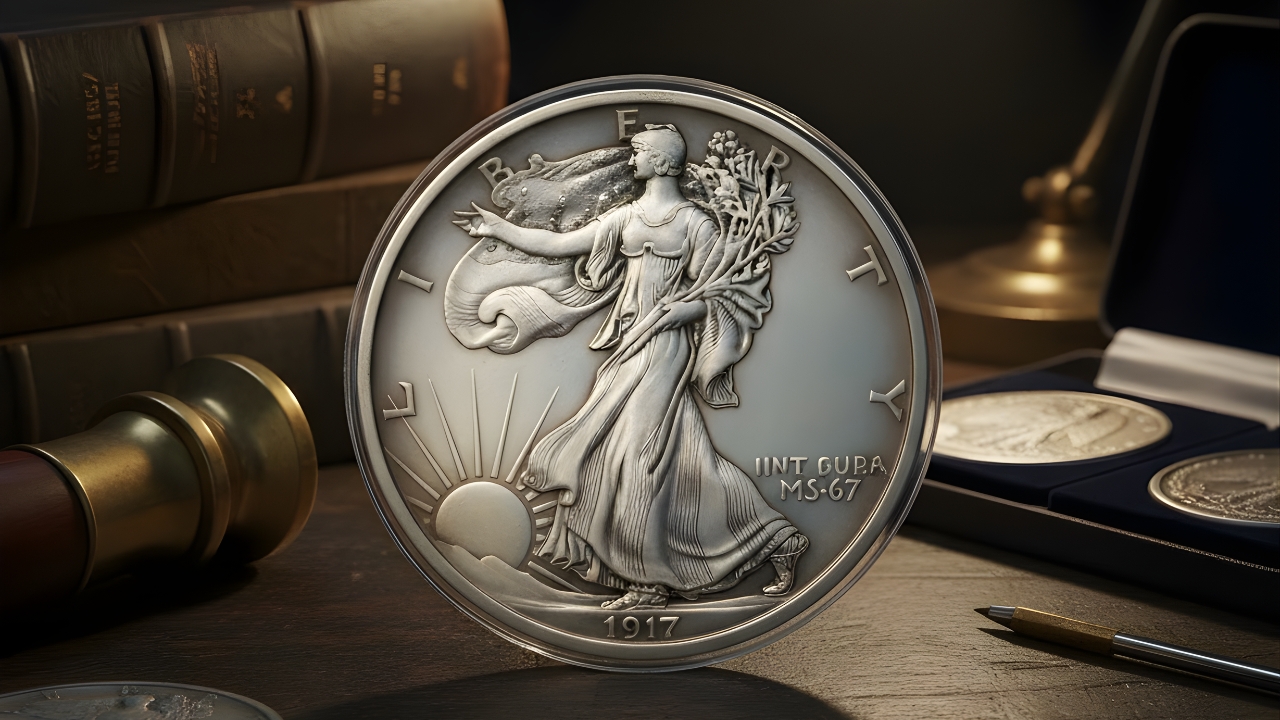
Few American coins capture the imagination quite like the Walking Liberty Half Dollar. Even people who don’t collect coins often recognize its graceful design. Struck during a period of global conflict and national change, the 1917 issue blends powerful symbolism with genuine scarcity, making it one of the most desirable early 20th-century silver coins. For collectors in 2026, this date remains a standout, with certain varieties reaching well into five or even six figures at auction.
While many examples are still affordable, a small group of rare mint mark combinations and high-grade survivors have transformed this coin into a serious prize for advanced collectors. Understanding what makes the 1917 special is the first step toward finding real value.
What Exactly Is the 1917 Walking Liberty Half Dollar
The Walking Liberty Half Dollar was introduced in 1916 to replace the older Barber design. Sculptor Adolph A. Weinman created a coin that felt fresh and modern, with flowing lines and bold detail. The design was so popular that it later inspired the American Silver Eagle bullion coin.
The 1917 pieces were struck during the early days of America’s involvement in World War I. That historical backdrop adds extra appeal, turning each coin into a small artifact from a defining moment in U.S. history. Collectors often value these coins not only for their silver content but also for their story.

A Closer Look at the Iconic Design
The obverse features Lady Liberty striding toward the rising sun, draped in the American flag and carrying branches of laurel and oak. The image suggests confidence, strength, and hope for the future. It’s widely considered one of the most beautiful designs ever used on U.S. coinage.
On the reverse, a powerful eagle stands perched on a rocky ledge with wings partially raised. The composition gives the coin a strong, balanced look that still feels timeless more than a century later.

Mint Marks and the Varieties That Matter
What truly sets the 1917 issue apart is its unusual mint mark placement. Coins were produced in Philadelphia, Denver, and San Francisco, but some display the mint mark on the obverse while others place it on the reverse. This small change created multiple collectible varieties.
The main types include the Philadelphia issue with no mint mark, the 1917-D with mint mark on either the obverse or reverse, and the 1917-S with the same two placements. Obverse mint mark coins, particularly from San Francisco, are generally scarcer and command stronger prices.

Why Certain Examples Are Worth Thousands
Not all 1917 halves are expensive. Circulated coins with heavy wear might sell for modest amounts. The big money comes from scarcity and condition. Coins that survived with sharp details and bright luster are much harder to find today.
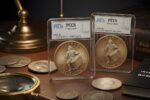
High-grade pieces graded Mint State by professional services can skyrocket in value. Some top examples of the 1917-S obverse variety have sold for over $150,000, and exceptional specimens may approach or exceed $175,000. When only a few coins exist in that condition, collectors compete aggressively.

Understanding Grading and Condition
Grading plays a huge role in pricing. A coin with heavy wear might only show outlines of Liberty’s gown and the eagle’s feathers, while a higher-grade piece displays crisp lines and full detail.
On the standard grading scale, categories range from heavily worn Good examples to flawless Mint State coins. Even a small jump in grade can mean a large jump in value. For this reason, certification from respected grading services is strongly recommended before buying or selling high-end pieces.

Smart Tips for New and Experienced Collectors
If you’re considering adding a 1917 Walking Liberty Half Dollar to your collection, start with reputable dealers or major auction houses. Compare prices across different grades so you understand what you’re paying for.
Avoid cleaning coins, as this can permanently reduce value. Store them in protective holders away from moisture and direct handling. If you’re aiming for long-term growth, focus on the best quality you can afford rather than quantity.

Many collectors also enjoy building complete sets that include every 1917 variety. Completing all mint mark placements adds an extra challenge and often enhances overall collection value.
Final Verdict
The 1917 Walking Liberty Half Dollar remains a true classic of American coinage. Its striking design, wartime history, and rare mint mark variations make it both beautiful and valuable. While common examples are accessible to beginners, top-grade and scarce varieties can reach extraordinary prices. For collectors seeking a blend of artistry and investment potential, this coin continues to stand out as one of the most rewarding choices in numismatics.