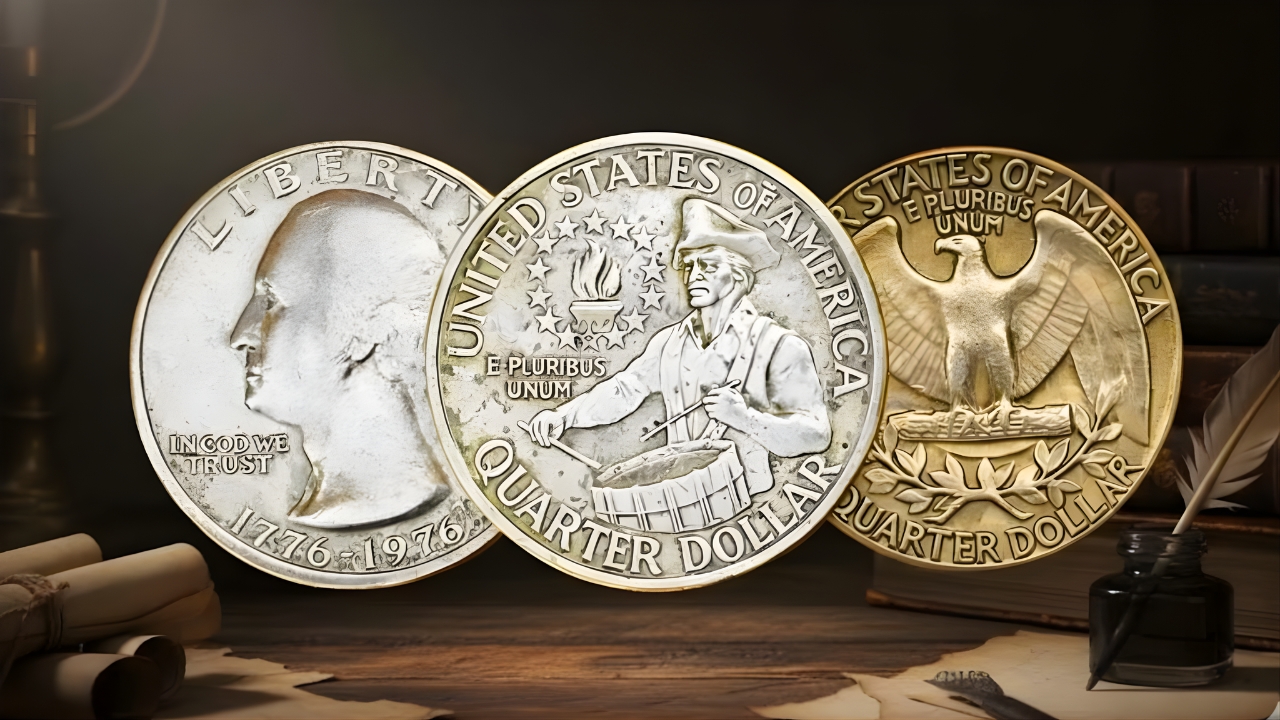
Some coins quietly pass through our hands without a second thought, but the 1776–1976 Bicentennial Quarter has always felt different. With its bold dual date and colonial drummer reverse, it instantly stands out from ordinary Washington quarters. Minted to celebrate America’s 200th birthday, this coin blends everyday currency with national history, which is why it continues to capture attention nearly fifty years later.
Even today, Bicentennial Quarters regularly appear in pocket change. Most are worth only their face value, yet certain versions have developed real collector appeal. Silver issues, pristine examples, and unusual mint errors can sell for far more than twenty-five cents. For many hobbyists, the excitement lies in not knowing when the next valuable find might show up.

A Coin Born from America’s 200th Birthday Celebration
During the mid-1970s, the United States prepared for a nationwide bicentennial celebration. The U.S. Mint marked the occasion by temporarily redesigning the quarter, half dollar, and dollar coins. Instead of the familiar eagle on the quarter’s reverse, artist Jack L. Ahr created a colonial drummer boy standing beside a torch, framed by thirteen stars representing the original colonies.
The obverse retained George Washington’s portrait but added the dual date 1776–1976. That small detail gave the coin a commemorative feel and tied the present to the nation’s revolutionary past. It quickly became one of the most recognized designs in modern American coinage.
Why Most Bicentennial Quarters Are Still Common
One reason values remain modest for many pieces is simple supply. The Mint produced these quarters in enormous numbers at the Philadelphia and Denver facilities. Because so many were struck, millions still circulate today, which keeps prices low for worn examples.
If a quarter shows heavy wear and is made from the standard copper-nickel composition, it is generally worth only face value. However, scarcity appears when you move beyond everyday circulation coins.
Silver Issues That Carry Extra Value
The San Francisco Mint produced special collector versions containing 40 percent silver. These coins were sold in sets rather than released into circulation, which immediately made them less common. Their silver content alone gives them a higher base value, and collectors often pay premiums for well-preserved examples.
Silver Bicentennial Quarters can often be identified by their solid gray edge, unlike copper-nickel coins that show a visible copper stripe. Proof versions with mirror-like finishes are especially desirable and tend to bring stronger prices.

Mint Errors That Can Be Worth Hundreds or More
Error coins are where values can jump dramatically. When something goes wrong during the minting process, the result can be a one-of-a-kind piece that collectors eagerly pursue.
Look for doubled lettering or dates, off-center strikes where part of the design is missing, clipped planchets with curved edges, or coins struck on the wrong metal blanks. These mistakes are rare, and rarity is what drives higher prices. Authenticated error quarters have sold for hundreds or even thousands of dollars depending on the severity and condition.

The Role of Condition and Professional Grading
Condition plays a huge role in determining value. A quarter that looks brand new, with crisp details and bright luster, is far scarcer than one that has spent decades in circulation. Collectors describe these as uncirculated or Mint State coins.
Professional grading services can evaluate and certify coins, assigning a numerical grade that reflects their preservation. Certified coins often sell more easily because buyers trust the assessment. Even a common Bicentennial Quarter can be worth significantly more if it receives a high grade.

How to Check Your Own Coins at Home
You don’t need specialized tools to begin searching. Start by separating Bicentennial Quarters by mint mark. Check the edge for silver content and examine surfaces closely for unusual features. Good lighting and a simple magnifier help reveal small details.
Handle coins gently and avoid cleaning them. Cleaning can scratch surfaces and lower value instantly. Proper storage in holders or albums will keep them in the best possible condition.
Final Verdict
The 1776–1976 Bicentennial Quarter is more than spare change. It’s a small piece of American history that combines patriotic design with real collecting potential. While most examples remain common, silver issues, sharp uncirculated coins, and mint errors can carry meaningful premiums. Whether you are a seasoned collector or simply curious about the coins in your pocket, taking a closer look at these quarters might lead to an unexpectedly valuable discovery.