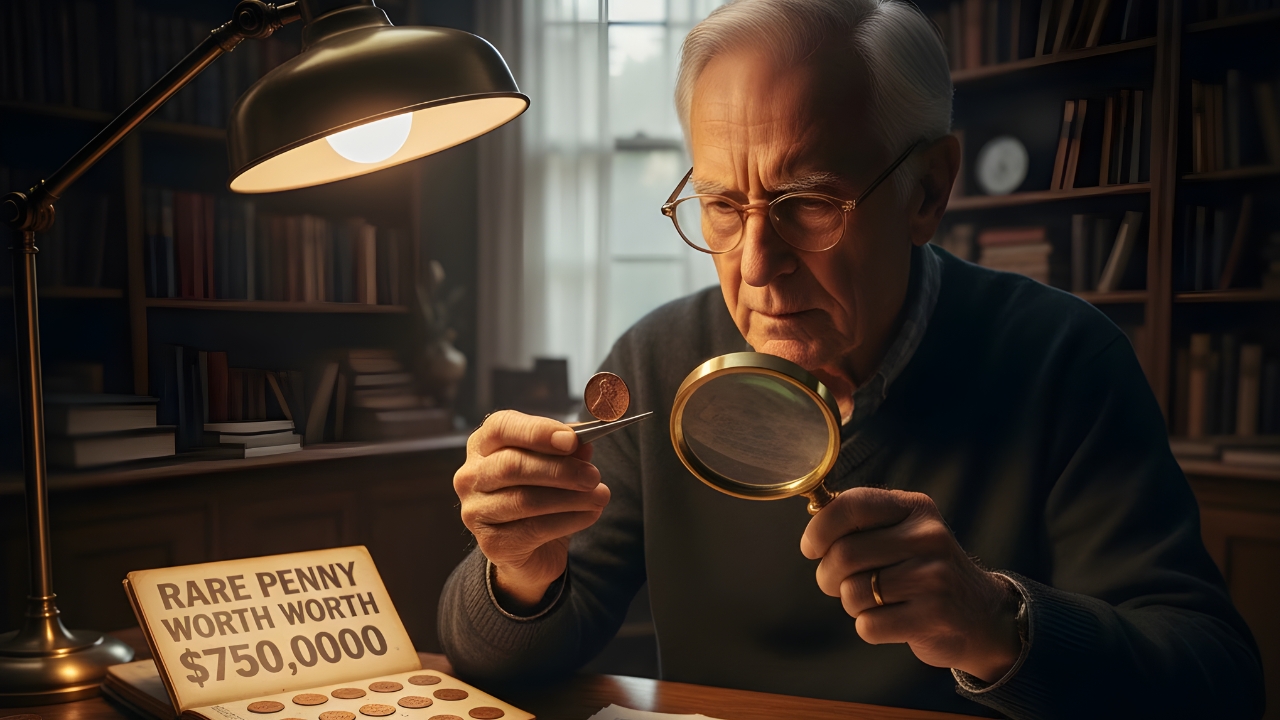
Pennies are easy to ignore. They pile up in jars, slip between couch cushions, and often feel more like clutter than currency. Yet in the world of coin collecting, some of these tiny copper coins have become legends. A few rare Lincoln cents have sold for astonishing amounts, with certain examples reaching as high as $750,000. It’s a reminder that even the smallest denomination can hold enormous value when rarity and history come together.
For collectors, the thrill lies in that possibility. Every handful of change could hide a coin that tells a unique story or carries a price tag far beyond one cent.
What Exactly Is the Lincoln Penny and Why Do Collectors Love It
The Lincoln cent debuted in 1909 to honor the 100th anniversary of Abraham Lincoln’s birth. Designed by Victor David Brenner, it made history as the first circulating U.S. coin to feature a real person. Lincoln’s portrait appears on the front, while the original reverse showed two wheat stalks framing the words One Cent.
That wheat design, used until 1958, has become a favorite among collectors. These “wheat pennies” connect people to the early 20th century and to generations who used them in everyday life. Because they circulated heavily for decades, well-preserved examples are surprisingly scarce, which naturally increases their value.

The $750,000 Penny That Shocked Collectors
Among all Lincoln cents, one of the most famous is the 1943 copper penny. During World War II, copper was needed for military equipment, so the U.S. Mint switched to zinc-coated steel for that year’s pennies. However, a few leftover copper blanks accidentally made their way into production.
The result was a tiny batch of copper pennies dated 1943, a year when they technically shouldn’t exist. Fewer than a few dozen are believed to survive. Their rarity and fascinating backstory have pushed auction prices into the hundreds of thousands, with top examples nearing $750,000.

Other Pennies That Command Big Money
The 1943 copper cent isn’t alone. Several other Lincoln pennies have achieved impressive values.
The 1944 steel penny is another wartime mistake. When the Mint returned to copper in 1944, a few steel blanks from the previous year were still around and were accidentally struck. These coins are just as unusual and highly sought after.

The 1909-S VDB penny is famous for a different reason. The designer’s initials appeared prominently on the reverse, which sparked public debate. The Mint quickly removed them, making the original San Francisco version with “VDB” extremely limited. High-grade examples can sell for huge sums.
Then there are error coins like the 1955 doubled die and the 1969-S doubled die. On these coins, the lettering and date appear visibly doubled, creating a dramatic look that collectors instantly recognize. Strong examples often reach five or six figures.

Why Errors and Low Mintages Matter
Coins become valuable when supply can’t meet demand. Low mintages mean fewer coins exist to begin with. Errors make each piece unique because they were created by accident and can’t be easily reproduced.
When a coin combines both factors, scarcity increases even more. Add historical significance or strong collector interest, and prices can climb quickly. That’s how a penny turns into a major collectible.

The Critical Role of Condition
Condition is just as important as rarity. Two identical pennies can have completely different values based on wear. A scratched, heavily circulated coin may be worth only a few dollars, while the same date in mint condition could be worth thousands.
Collectors use professional grading services to evaluate coins on a standard scale. Certified coins often sell for more because buyers trust their authenticity and grade. If you think you have something special, professional grading is usually worth considering.
How to Spot Valuable Pennies in Your Change
Start by checking dates and mint marks. Look for older wheat pennies and coins from key years. Use a magnifying glass to inspect for doubling, unusual colors, or off-center strikes. Pay attention to weight and metal, as wrong planchet errors can feel different from normal coins.
Just as important, avoid cleaning your coins. Cleaning can damage surfaces and significantly reduce value.
The Ongoing Appeal of Penny Hunting
The beauty of penny collecting is its accessibility. Anyone can participate without expensive equipment or large investments. Valuable coins still appear in circulation because people often overlook them. That keeps the hunt exciting and unpredictable.
Finding a rare penny isn’t just about money. It’s about uncovering a small piece of history and realizing it survived decades of everyday use.

Final Verdict
The rare penny valued at $750,000 proves that extraordinary treasures can hide in the most ordinary places. From wartime metal mistakes to famous doubled dies and low-mintage classics, Lincoln cents offer collectors a mix of history, mystery, and opportunity. With patience and a careful eye, your next handful of change might hold far more than one cent.
Disclaimer
Coin specifications, prices, availability, and market demand may change over time or vary by region. Values depend heavily on rarity, authenticity, and condition. Images or features may differ from actual coins. Always verify details with official mint sources or certified numismatic professionals before buying, selling, or investing in collectible coins.